On a mission: 50 years of transforming lives

For 50 years, Shepherd Center has been on a mission to redefine rehabilitation, empower patients, and inspire hope. From a six-bed unit to a world-renowned neurorehabilitation hospital, our journey has been filled with groundbreaking innovations, life-changing care, and a steadfast commitment to our patients and families.

Explore the decades of milestones that have shaped Shepherd Center and continue to propel us forward. Scroll through our history and see how every moment has brought us closer to a future where possibilities are limitless.
A family’s love, a legacy of hope

Every journey at Shepherd Center begins with a story — a story of resilience, determination, and often the unwavering power of family. Our own story started with a mother’s love and a son’s unyielding spirit, leading to a legacy that continues to transform lives today.

A mother’s mission

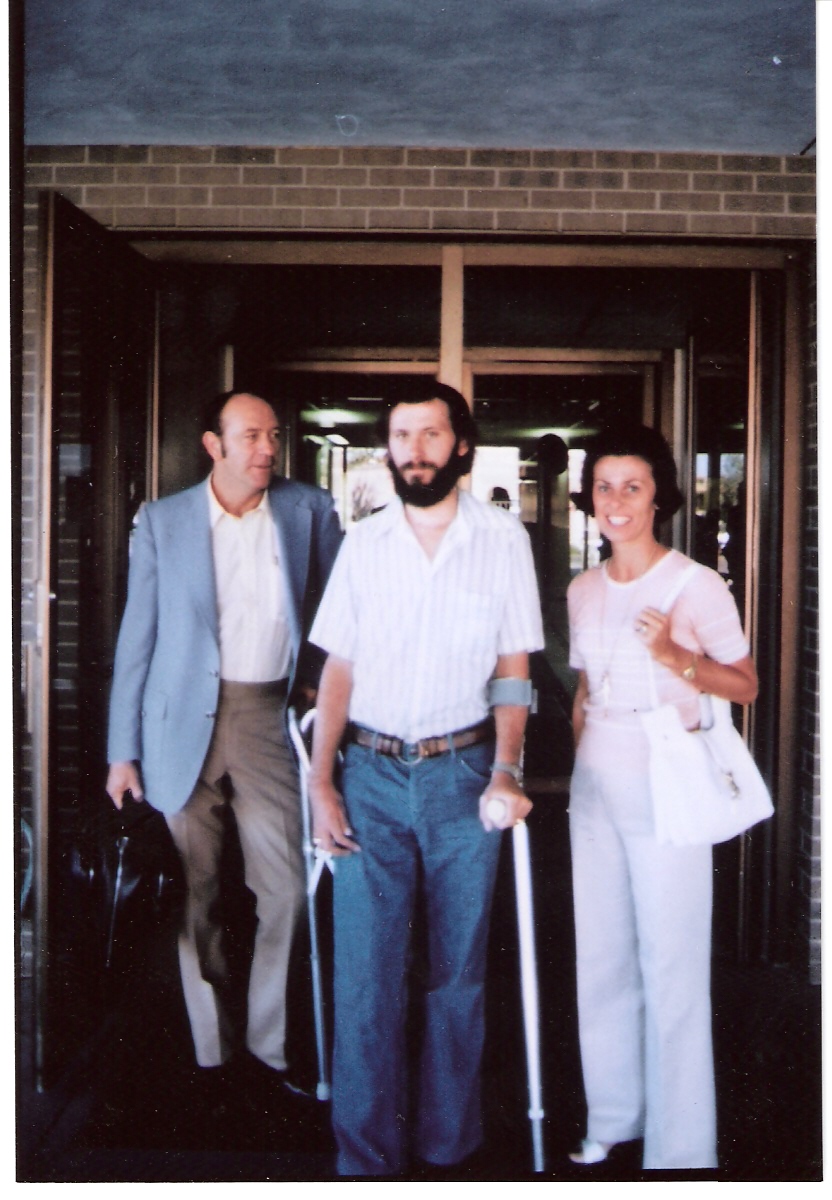
In 1973, Alana Shepherd’s world was forever changed when her 22-year-old son, James, suffered a traumatic spinal cord injury while bodysurfing off the coast of Rio de Janeiro. Paralyzed from the neck down, James faced a grim prognosis. But with the unwavering support of his parents, Alana and Harold Shepherd, and the help of a rehabilitation center in Denver, James defied the odds and regained his ability to walk using a leg brace and cane.

Returning to Atlanta, the Shepherd family was struck by the lack of specialized spinal cord injury rehabilitation in the United States, much less in the Southeast.

Determined to change that, Alana embarked on a mission to ensure no other family would endure the same struggle.

With unwavering determination

Alana, her husband Harold, and James, along with Dr. David Apple and the support of dedicated friends and medical professionals, founded Shepherd Center in 1975. It began as a modest six-bed unit, a beacon of hope in a region where such care was scarce, a center that would offer cutting-edge rehabilitation and a culture of care rooted in family.

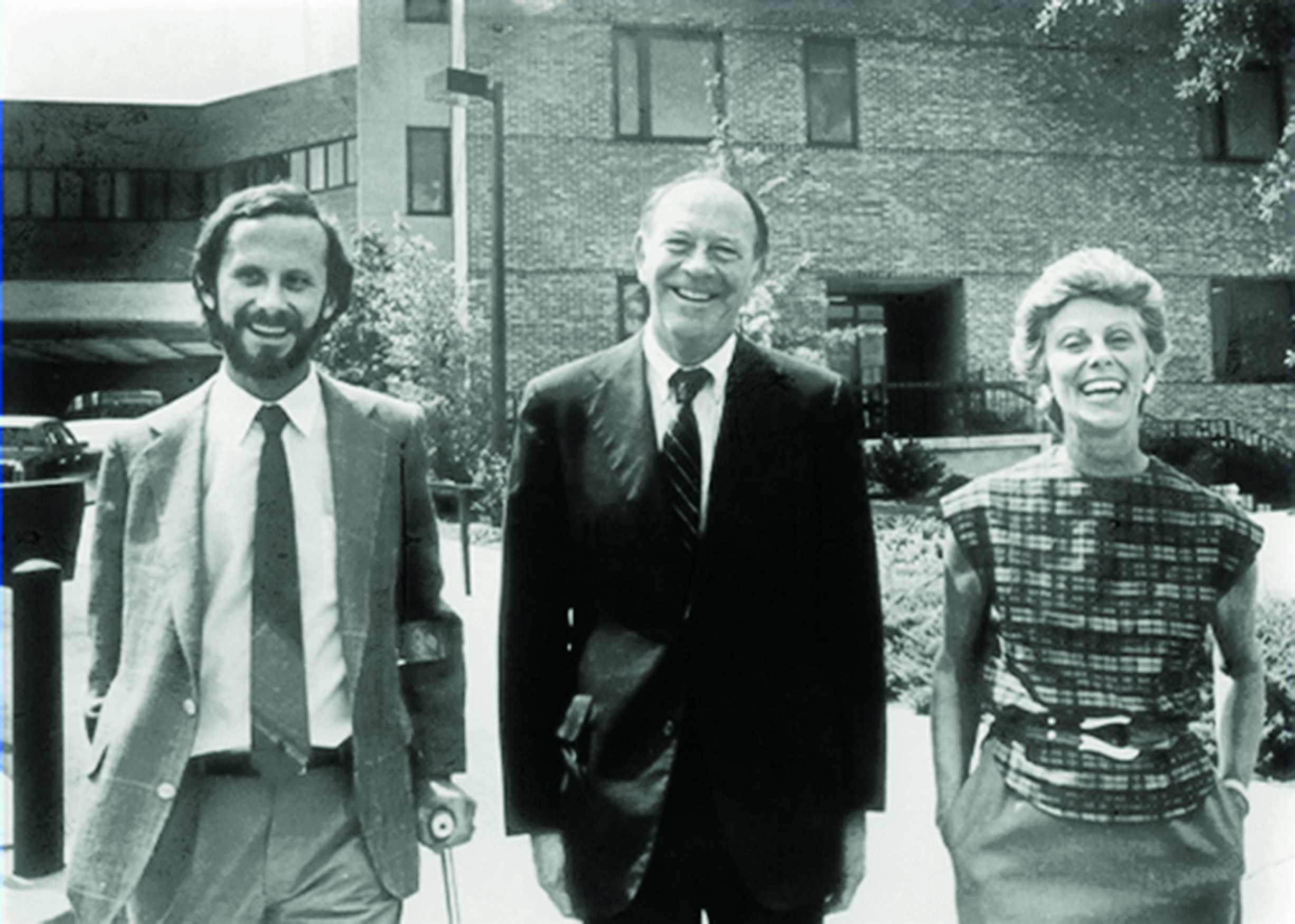
Three people are standing outside a building: Harold Shepherd, James Shepherd, and Alana Shepherd. The person in the middle, with a beard, is using crutches. The person on the left is wearing a light suit, and the person on the right is wearing light casual clothes and holding a white bag.
Through personal testimonials, get a glimpse into the journey of recovery, the support provided by the dedicated care teams, and the hope that Shepherd Center instills in both patients and their families.
The 1970s
Where Hope Begins
A sign with the text "1970s Where Hope Begins" over a blurred black and white background of a parking lot and buildings. The word "1970s" is in white with a yellow map pin inside the 'o'.

Establishing Shepherd Center and its patient-centered mission.

1973
A Life-Altering Injury Sparks a Mission

James Shepherd sustains a spinal cord injury in a bodysurfing accident in Rio de Janeiro. After months of intensive rehabilitation in Denver, CO, he walks out of the hospital with a leg brace and crutch. Inspired by this experience, the Shepherd family envisions a new model of rehabilitation—one that prioritizes patient and family-centered care.

1975
Shepherd Spinal Center Opens Its Doors

Shepherd Spinal Center opens in Atlanta as a six-bed facility staffed by two doctors and three therapists. Dr. David Apple serves as the first medical director. A waiting list quickly develops, underscoring the need for expanded services.

The 1980s
Expanding Horizons
1980s graphic with the text "1980s Expanding Horizons" over a blurred black-and-white photo of people standing and sitting, with a ribbon-cutting ceremony happening in the background.

Growth, new facilities, and the beginning of clinical research.

1983
Dr. Apple Leads ASIA

Dr. David F. Apple, Jr., Shepherd Center’s Founding Medical Director, becomes president of the American Spinal Injury Association. Then, the youngest member elected to that post, Dr. Apple led the then 275-physician-member organization

1985
Clinical Research Program Launches

The Clinical Research Program launches, later evolving into the Virginia C. Crawford Research Institute. This positions Shepherd Center as a leader in groundbreaking rehabilitation research.

The 1990s
Building a Legacy
Blue and yellow graphic with text "1990s Building a Legacy" featuring a circle with heart and interconnected lines. Blurred grayscale image of people wearing hard hats in the background at a construction site.

Major expansion, new specialized programs, and global impact.

1991
MS Institute Expands Specialized Care

The Andrew C. Carlos Multiple Sclerosis Institute is established to provide specialized care for individuals with MS.

1970s – Where hope begins

Establishing Shepherd Center and its patient-centered mission

  • 1973 – James Shepherd sustains a spinal cord injury in a bodysurfing accident in Rio de Janeiro. After months of intensive rehabilitation in Denver, CO, he walks out of the hospital with a leg brace and crutch. Inspired by this experience, the Shepherd family envisions a new model of rehabilitation—one that prioritizes patient and family-centered care.
  • 1975 – Shepherd Spinal Center opens in Atlanta as a six-bed facility staffed by two doctors and three therapists. Dr. David Apple serves as the first medical director. A waiting list quickly develops, underscoring the need for expanded services.

1980s – Expanding Horizons

Growth, new facilities, and the beginning of clinical research

  • 1982 – Shepherd Center moves to its current location on Peachtree Road in Buckhead, expanding to a 40-bed facility. New programs, including peer support and advocacy, are introduced.
  • 1985 – The Clinical Research Program launches, later evolving into the Virginia C. Crawford Research Institute. This positions Shepherd Center as a leader in groundbreaking rehabilitation research.

1990s – Building a legacy

Major expansion, new specialized programs, and global impact

  • 1991 – The Andrew C. Carlos Multiple Sclerosis Institute is established to provide specialized care for individuals with MS.
  • 1992 – Shepherd Center doubles in size with the opening of the Billi Marcus Building, a 153,000-square-foot expansion that includes a full-size gym, swimming pool, and auditorium.
  • 1995 – The Acquired Brain Injury (ABI) Program launches, adding a 20-bed unit for patients with brain injuries.
  • 1996 – Shepherd Center plays a key role in the Atlanta Paralympic Games, with co-founders Alana and Harold Shepherd and Dr. David Apple leading the organizing committee. Their efforts influence future Paralympic policies, ensuring greater accessibility and success for host cities.
  • 1997 – Shepherd Pathways opens, providing community-based outpatient services for brain injury survivors.

2000s – Pioneering care

Advancing patient care with new specialized programs and housing

  • 2000 – The Dean Stroud Spine and Pain Institute is established, offering comprehensive care for individuals with chronic pain.
  • 2008 – The Irene and George Woodruff Family Residence Center opens, providing donor-funded housing to help families stay close to their loved ones during rehabilitation.
  • 2008 – Shepherd Center launches the SHARE Military Initiative, a pioneering rehabilitation program for military personnel with traumatic brain injuries. It becomes a national model for veteran care.

2010s – Advancing Possibilities

Technological innovations and infrastructure improvements

  • 2010 – A $9.8 million renovation project increases Shepherd Center’s capacity to 152 beds, including a 10-bed ICU.
  • 2013 – Shepherd Center collaborates on the development of Indego, a powered exoskeleton designed to help individuals with spinal cord injuries regain mobility.
  • 2019 – James Shepherd, co-founder and visionary leader, passes away, leaving behind a legacy of hope, resilience, and life-changing rehabilitation.

2020s – Building the future

Leadership transitions, new facilities, and a commitment to innovation

  • 2023 – Shepherd Center breaks ground on the Marcus Center for Advanced Rehabilitation, a cutting-edge facility that will expand patient access and house the Innovation Institute to drive advancements in rehabilitation research.
  • 2024 – Jamie Shepherd, grandson of founders Alana and Harold Shepherd, is appointed CEO, continuing the family’s legacy of transformative care. One month later, the Arthur M. Blank Family Residences open, providing 165 apartments—doubling Shepherd Center’s housing capacity.

It’s different here

From its humble beginnings, Shepherd Center has always been more than just a hospital. It’s a place where compassion, hope, and a family-centered approach to care are woven into every aspect of the patient experience.

Fifty years later, Alana Shepherd, known affectionately as the “mama on fire,” continues to inspire patients and staff with her unwavering dedication and infectious optimism. Her message to every new arrival resonates throughout our halls: “It’s different here. You’re going to get better.”